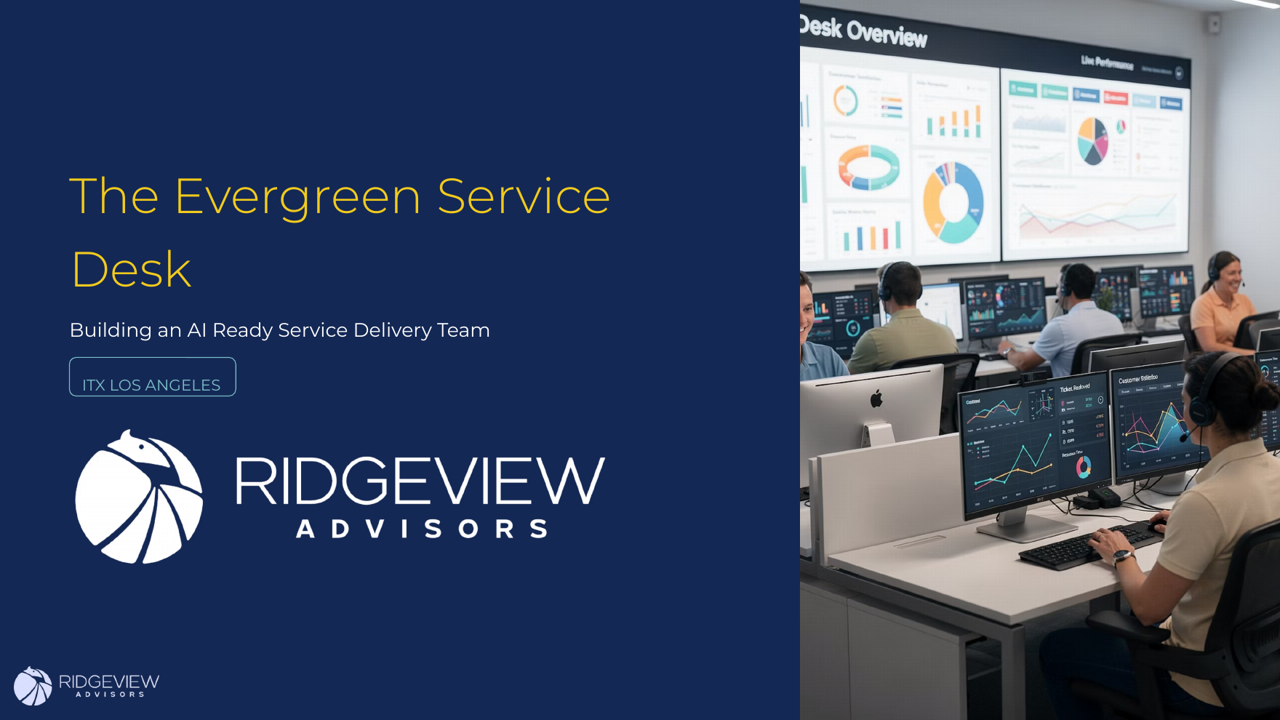
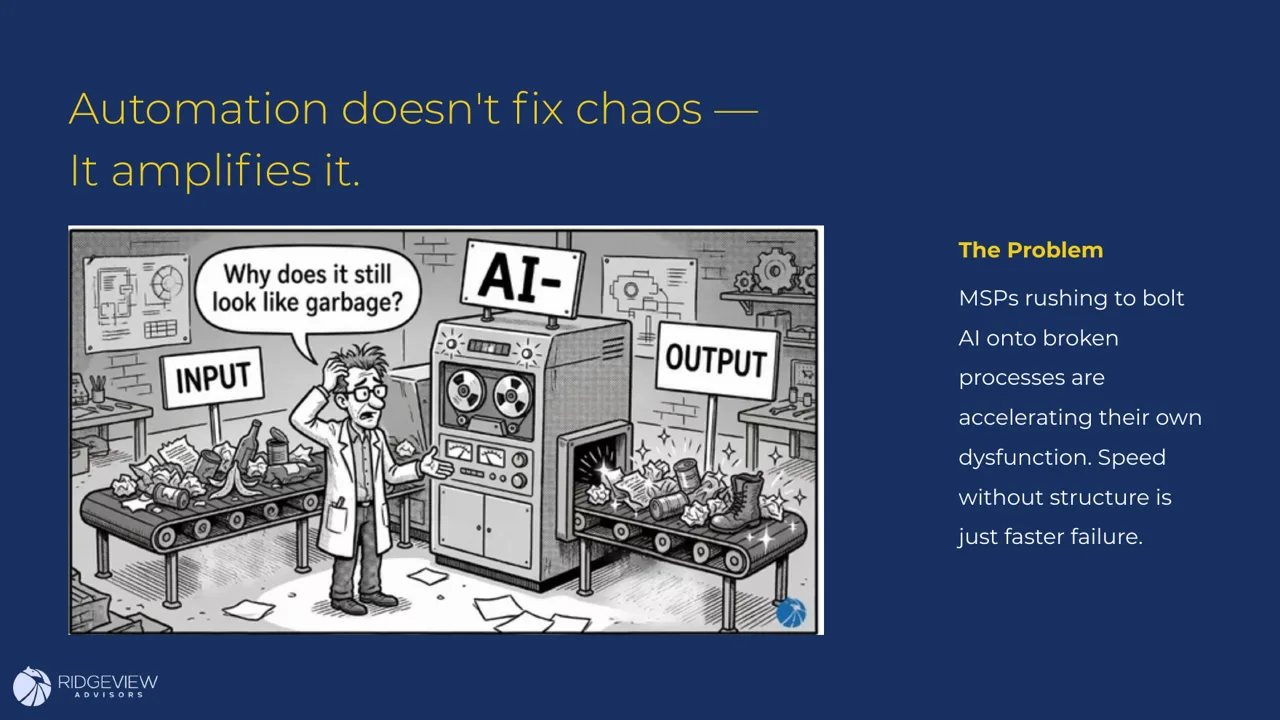

Adding AI to a broken service desk makes it worse, not better. Automation is a multiplier: point it at clean, structured work and it compounds your throughput; point it at chaos and it compounds the chaos. That is the argument Andrew Moore made in “Building the Evergreen Service Desk” at ITX Los Angeles, and it is the test every MSP owner should run before signing the next AI tool contract.
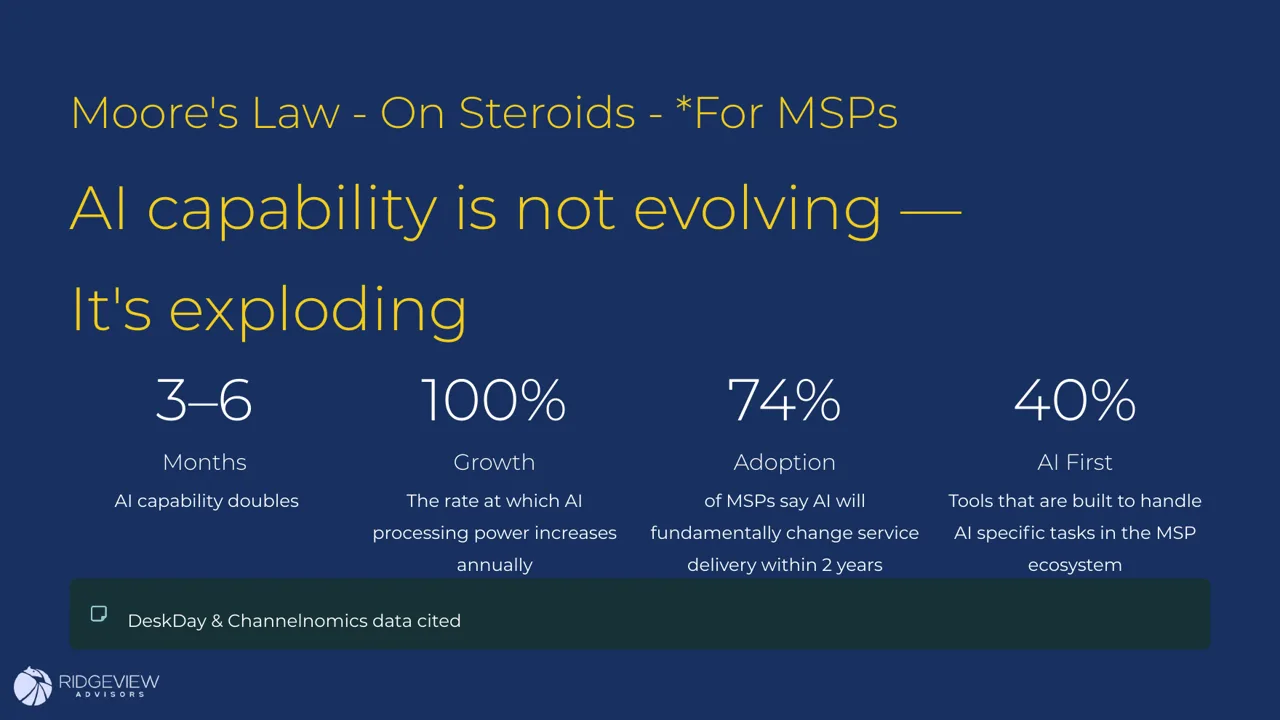
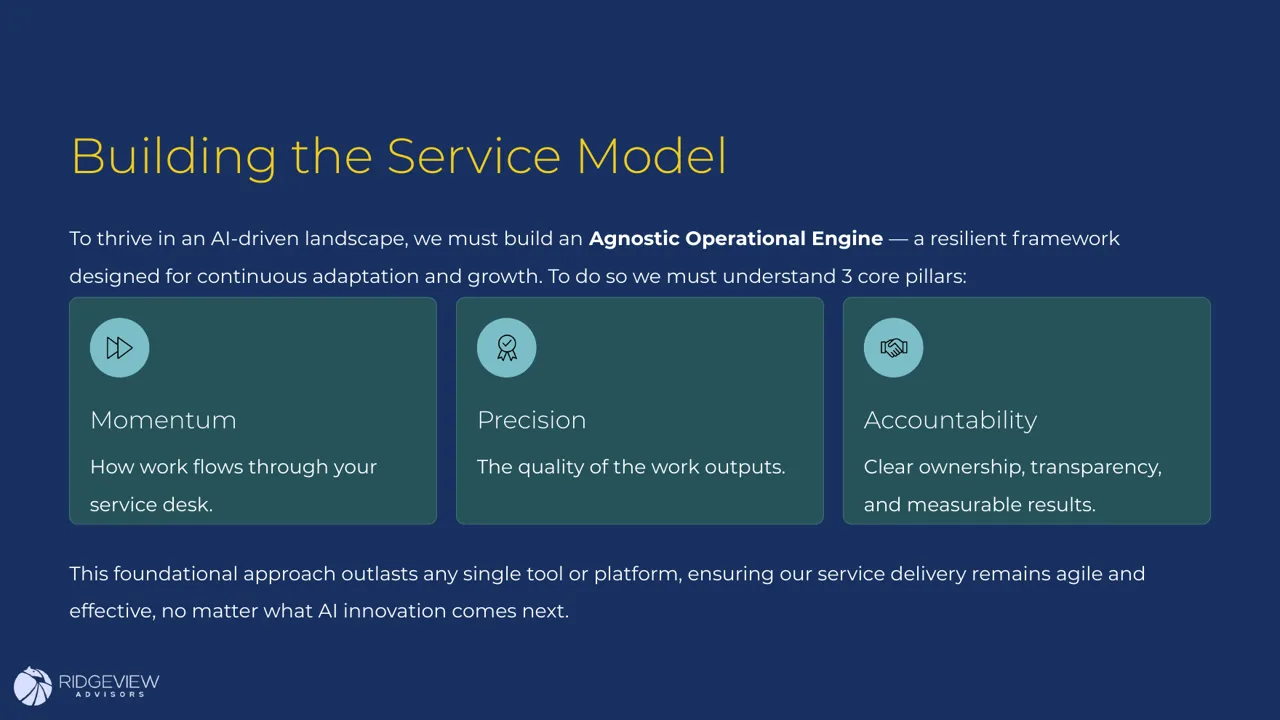
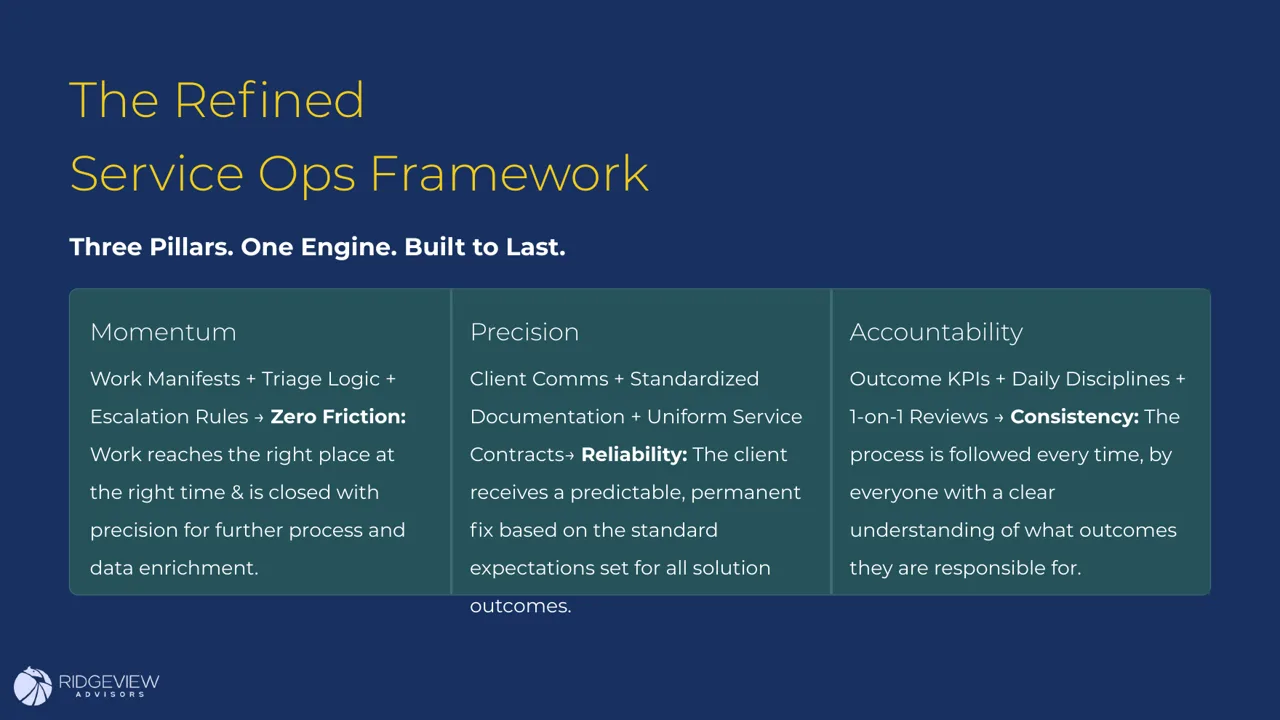
The pressure to automate is real. AI capability keeps compounding on a short cycle, and most MSP owners expect AI to reshape service delivery within a couple of years. The mistake is responding to that pressure by bolting expensive AI onto manual, undocumented processes. The path to an AI-ready service desk runs through the operating model first, not the tooling. What you build is an agnostic operational engine, one that does not depend on any single vendor and stays current as the tools churn. It rests on three pillars: Momentum, Precision, and Accountability.
Automation doesn’t fix chaos. It amplifies it.
The payoff for getting the engine right is measurable. Service Leadership’s 2025 profitability research (opens in a new tab) (ConnectWise, 2024 data) found that the highest operational-maturity providers run roughly three times the EBITDA margin of their median peers. Operational maturity is exactly what this engine builds, and it is what makes AI an accelerator instead of an accelerant.
Momentum: the logic of intake
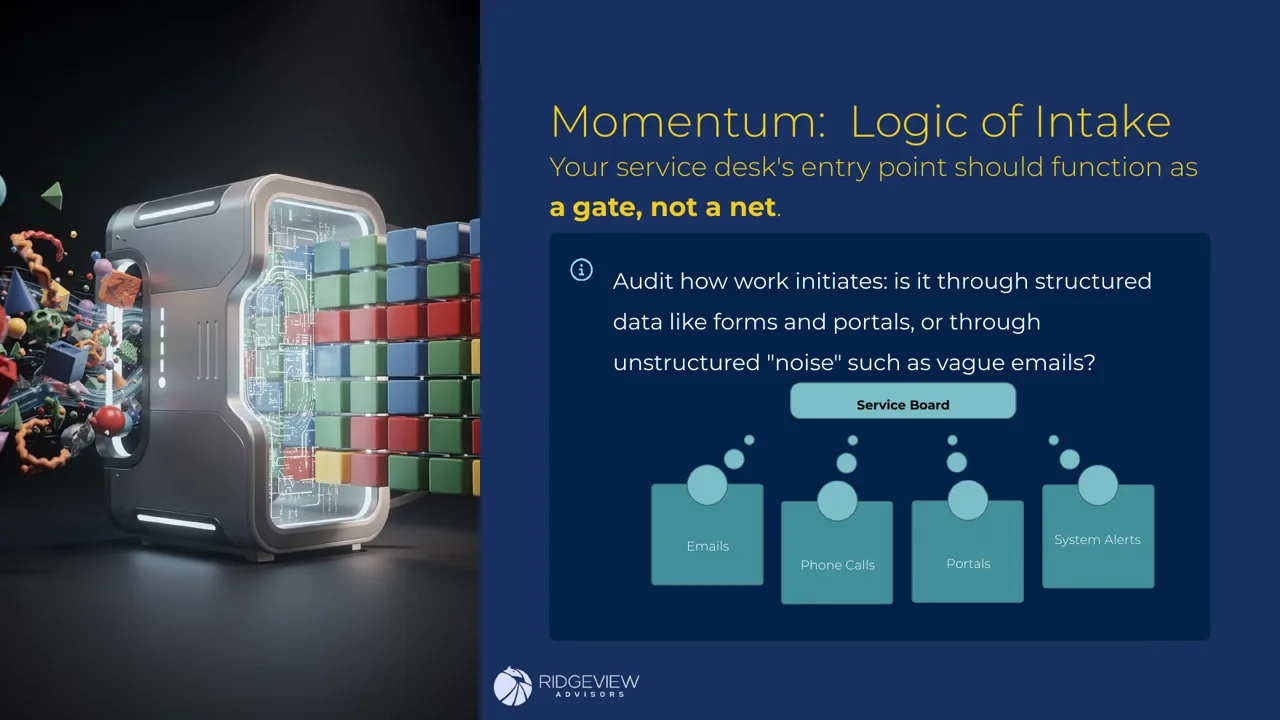
Your service desk entry point should work like a gate, not a net. Efficient delivery depends on moving away from unstructured noise, the vague email that could mean anything, and toward structured data captured through portals and forms. Structured intake is what makes everything downstream automatable, because an AI microtool can act on a field but not on a feeling.
Two disciplines hold the intake gate:
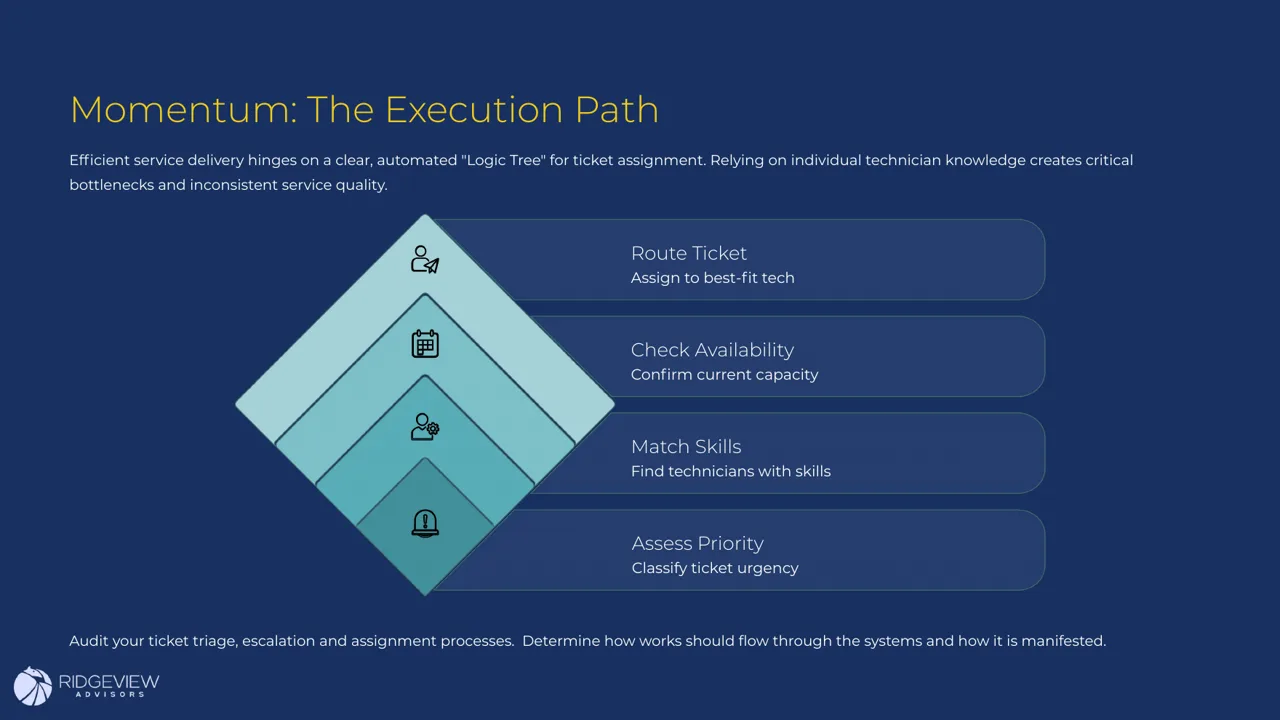
- The execution path: replace individual technician heroics with automated logic trees for ticket assignment, so the right work reaches the right resource without a human triaging every ticket by feel.
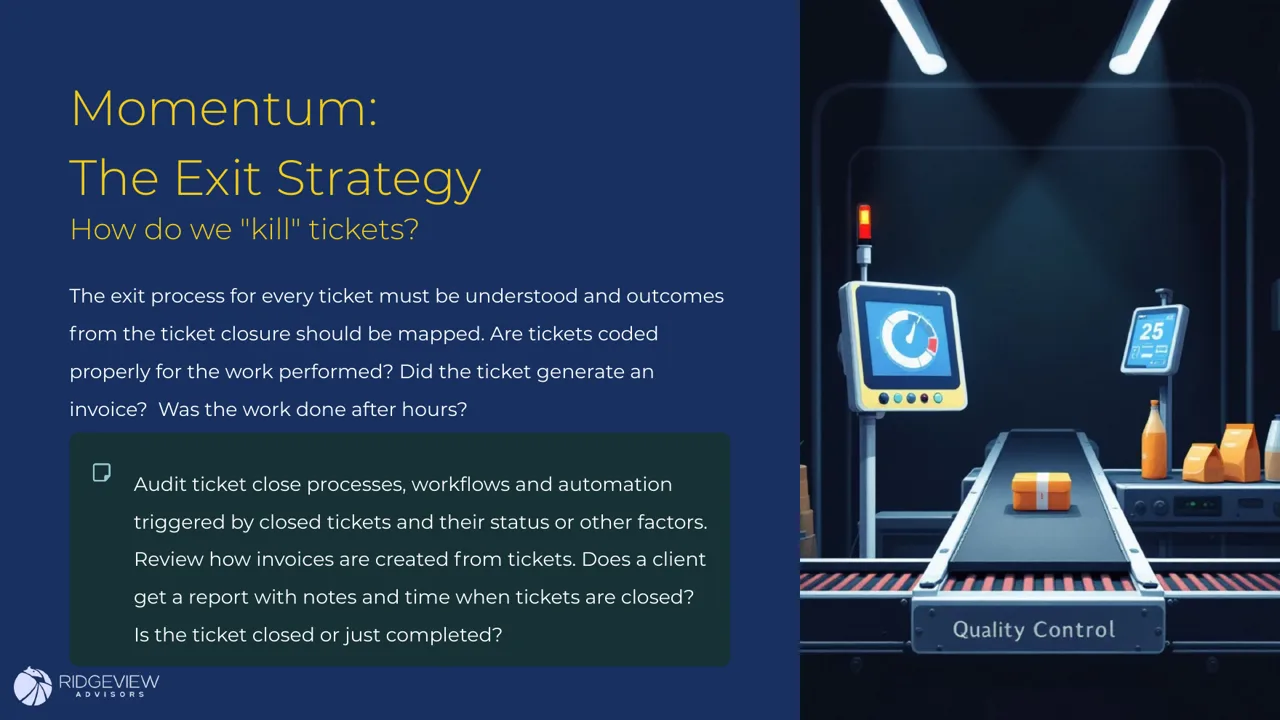
- The exit strategy: map every ticket closure. If you are not auditing how work is coded or how invoices are triggered at the moment a ticket is killed, your data is already stale, and stale data is the one thing AI cannot work around.
This is the same data-and-process discipline Mark Sowden, former VP of Service at IronEdge, walks through in the How to MSP© service desk episode.
Precision: from narrative to atomic SOPs
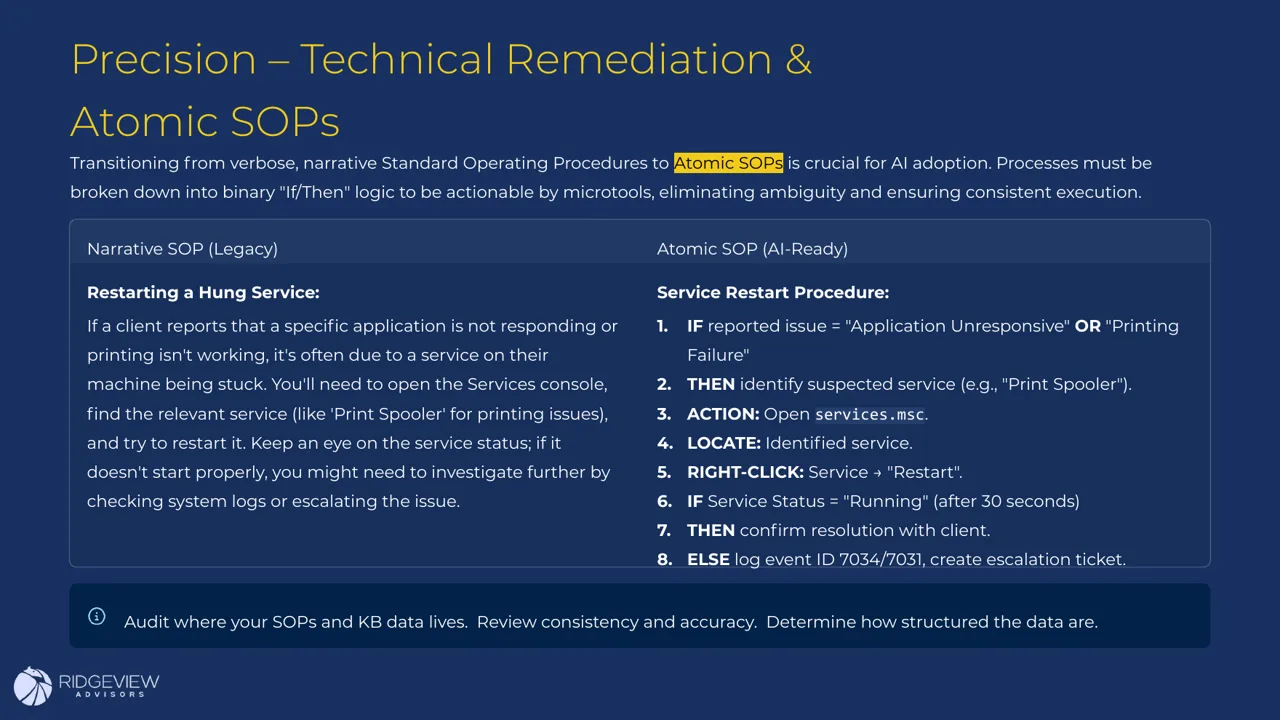
AI cannot navigate verbose, narrative documentation, so an AI-ready process has to be atomic. Move to SOPs that break each process into binary If/Then logic. The same atomic step a new technician can follow on day one is the step an AI microtool can execute reliably, which is why precision serves your people and your automation at once.
Two rules enforce precision:
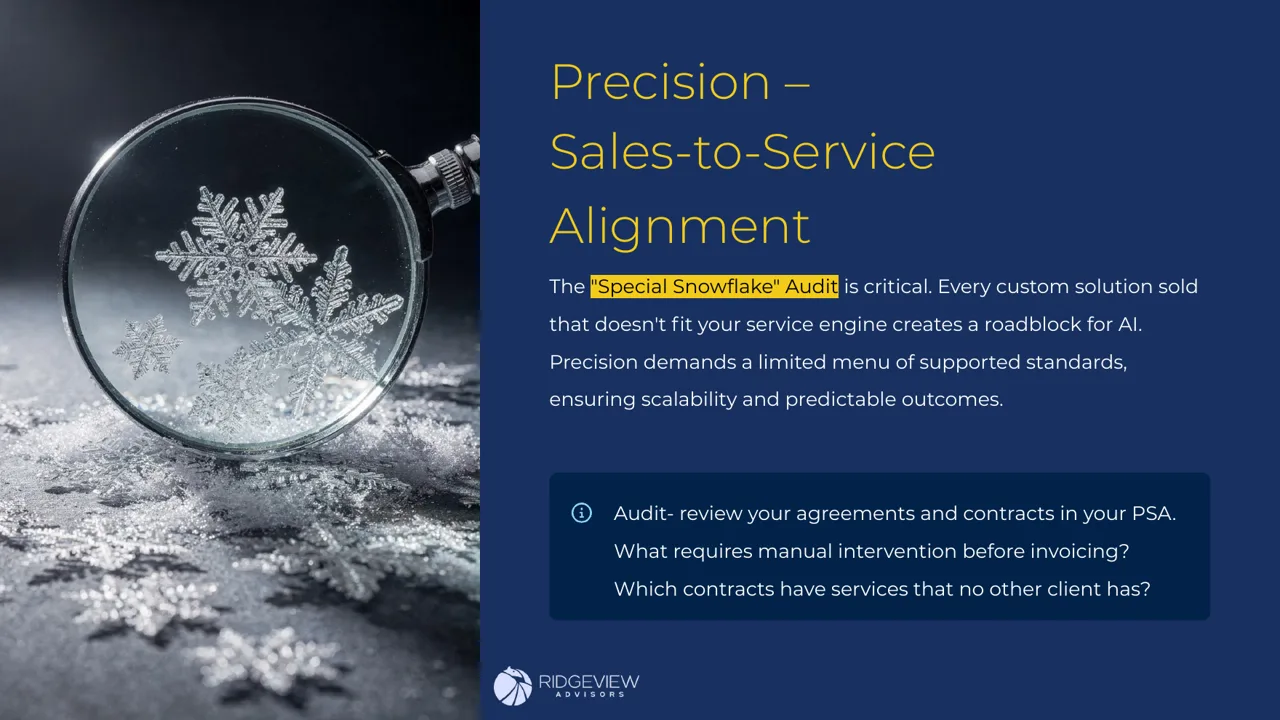
- Kill the special snowflake: custom, one-off solutions that do not fit your service engine are roadblocks to scale. Precision means a limited menu of supported standards, which is what makes outcomes predictable.
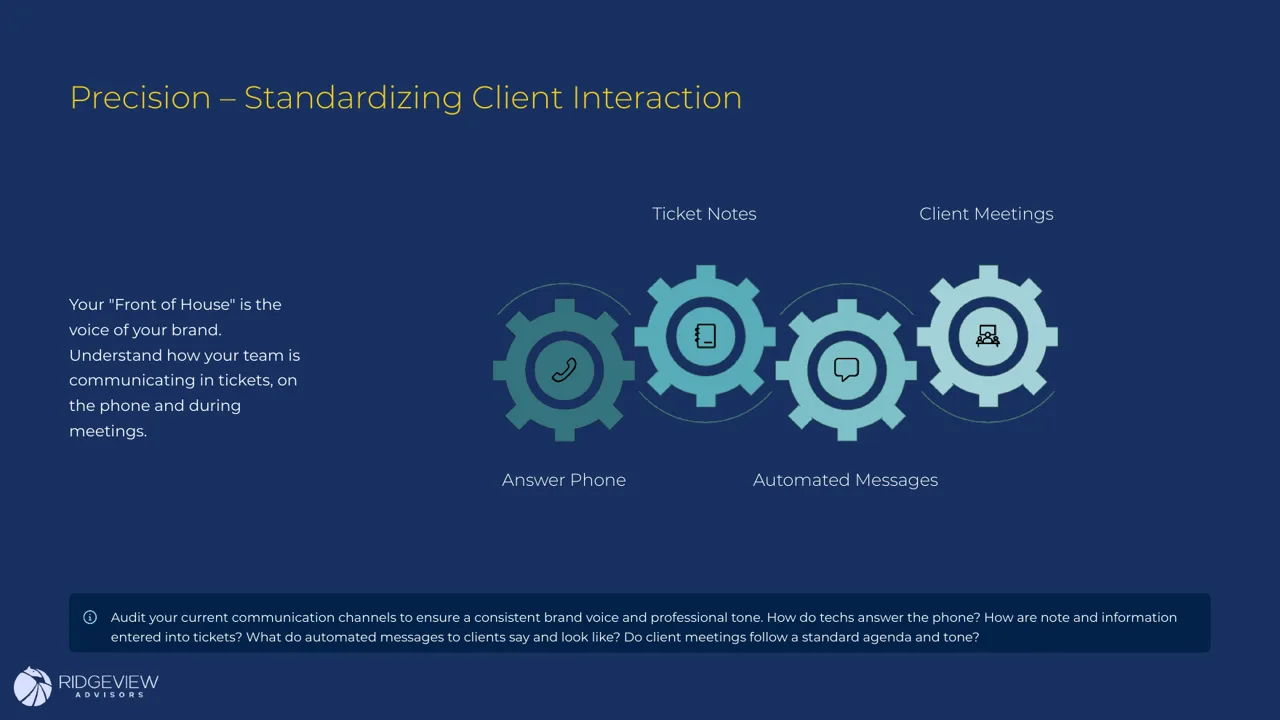
- Standardize the brand voice: your front-of-house interactions, from how technicians answer the phone to automated client messages, carry your brand. Standardize them so the client experience is consistent no matter who, or what, is responding.
Turning a pile of one-off fixes into a repeatable system is the process-and-people work behind tapping the armadillo.
Accountability: the daily disciplines
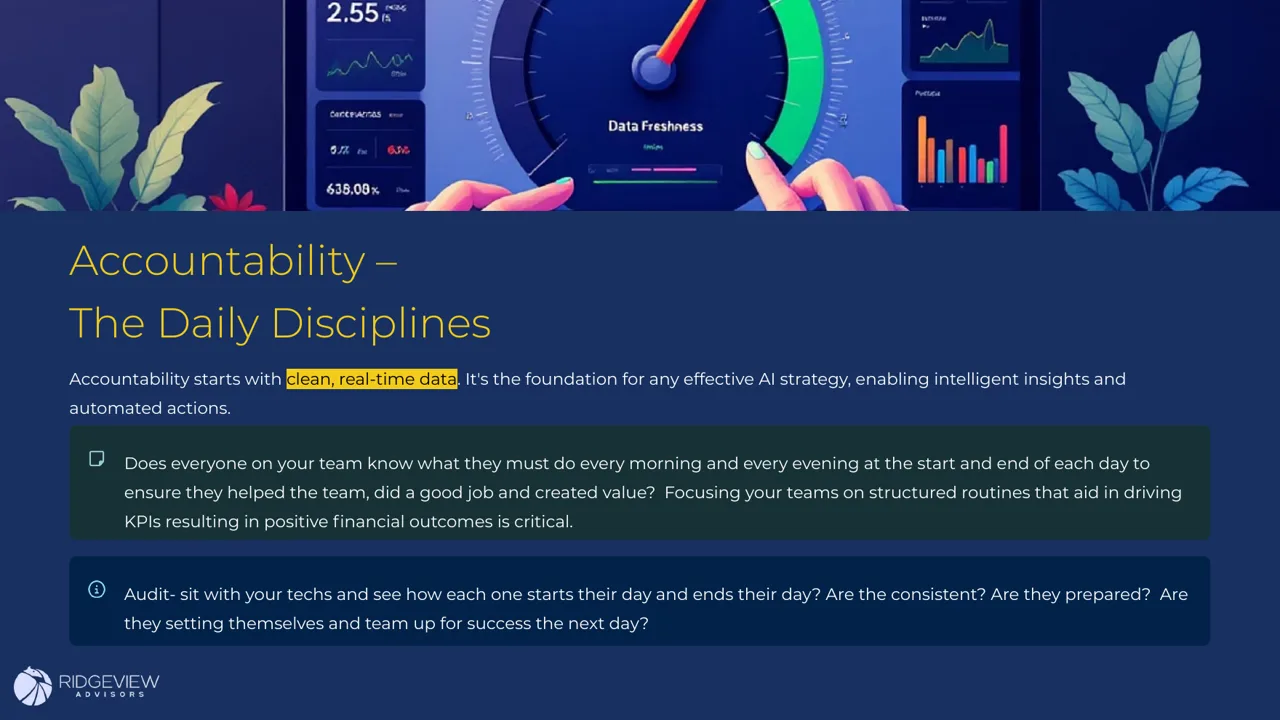
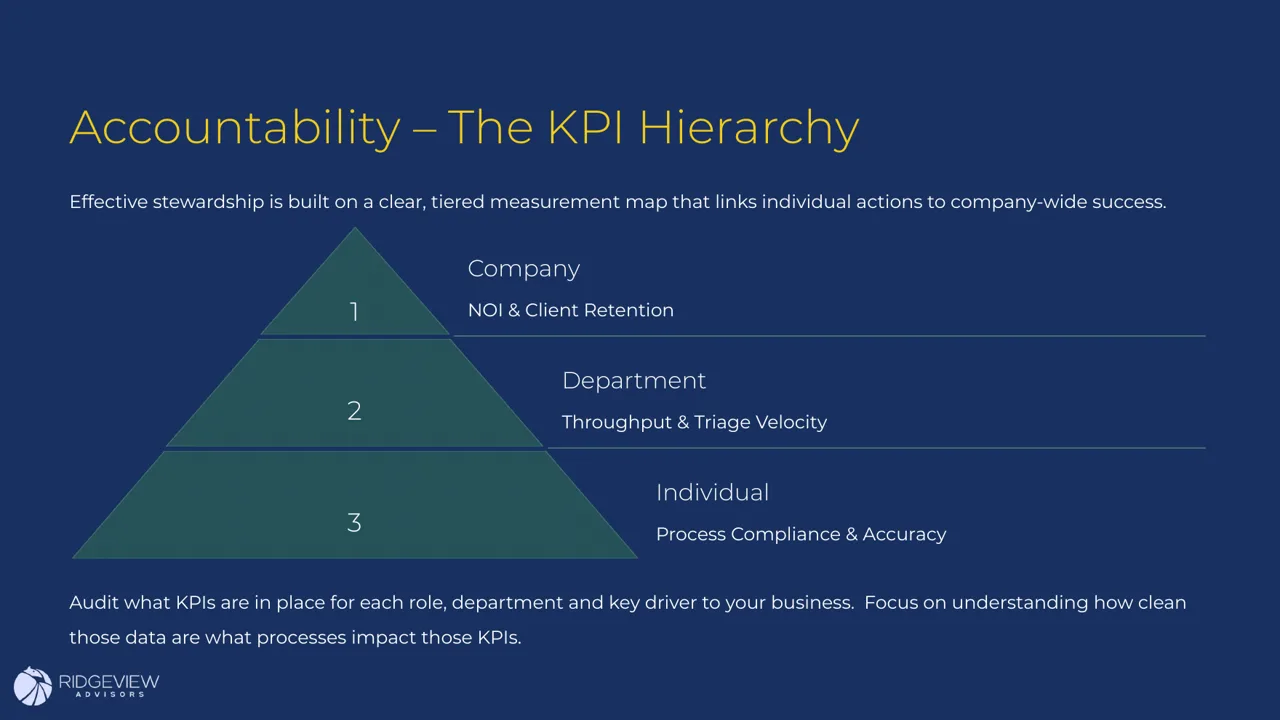
Clean, real-time data is the only foundation an AI strategy can stand on, and accountability is what keeps the data clean. It lives in structured routines that link individual actions to company-wide outcomes, the same operating rhythm behind the accountability flywheel.
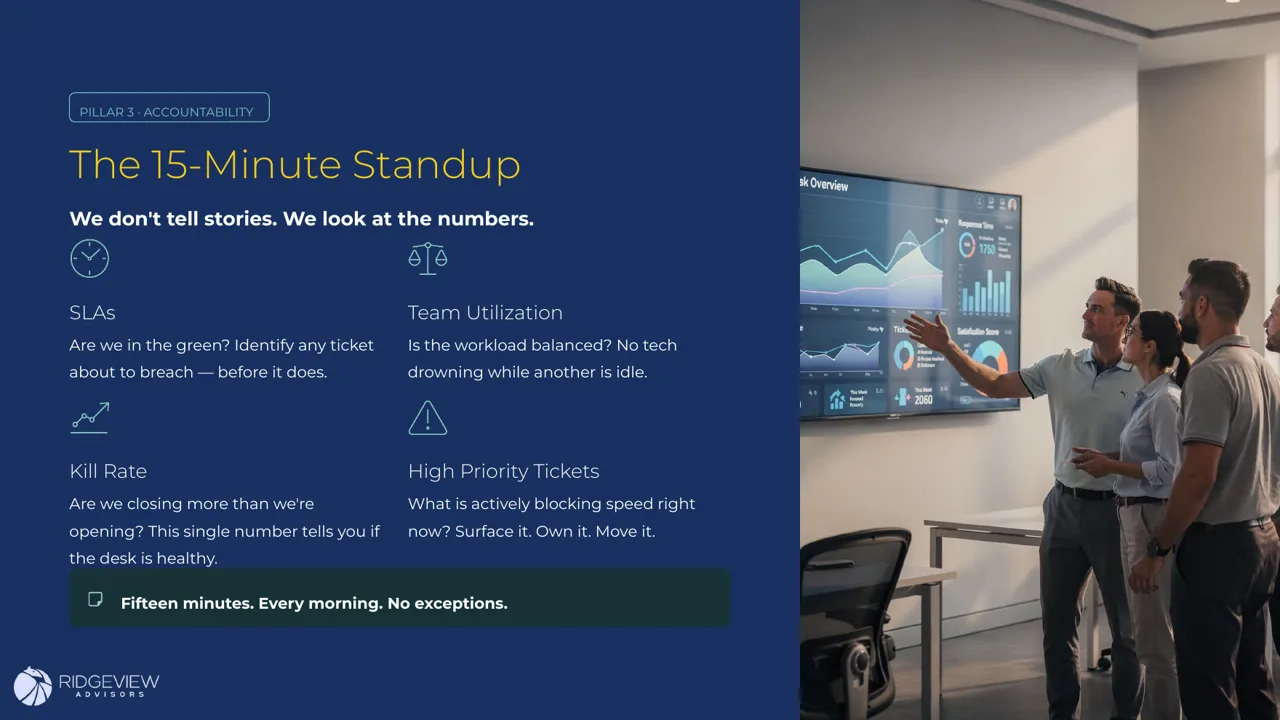
- The 15-minute standup: no stories, just numbers. Focus on SLAs, team utilization, and kill rate. Are you closing more tickets than you are opening?
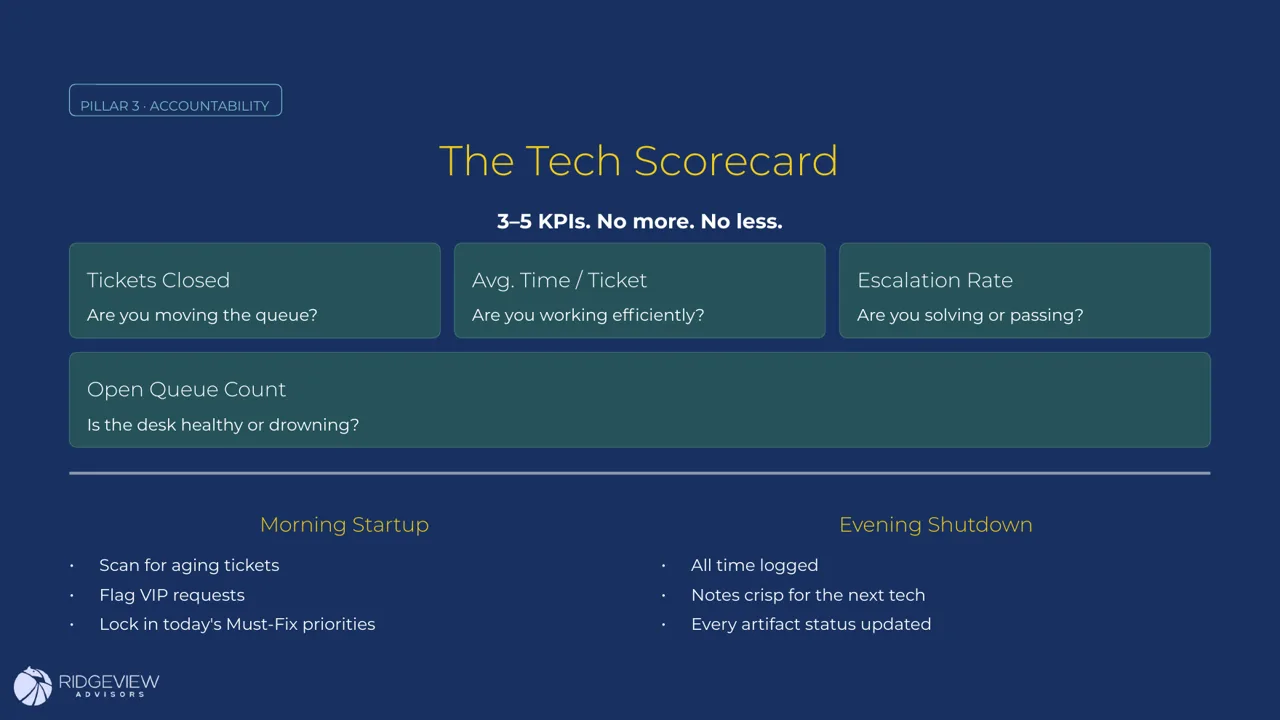
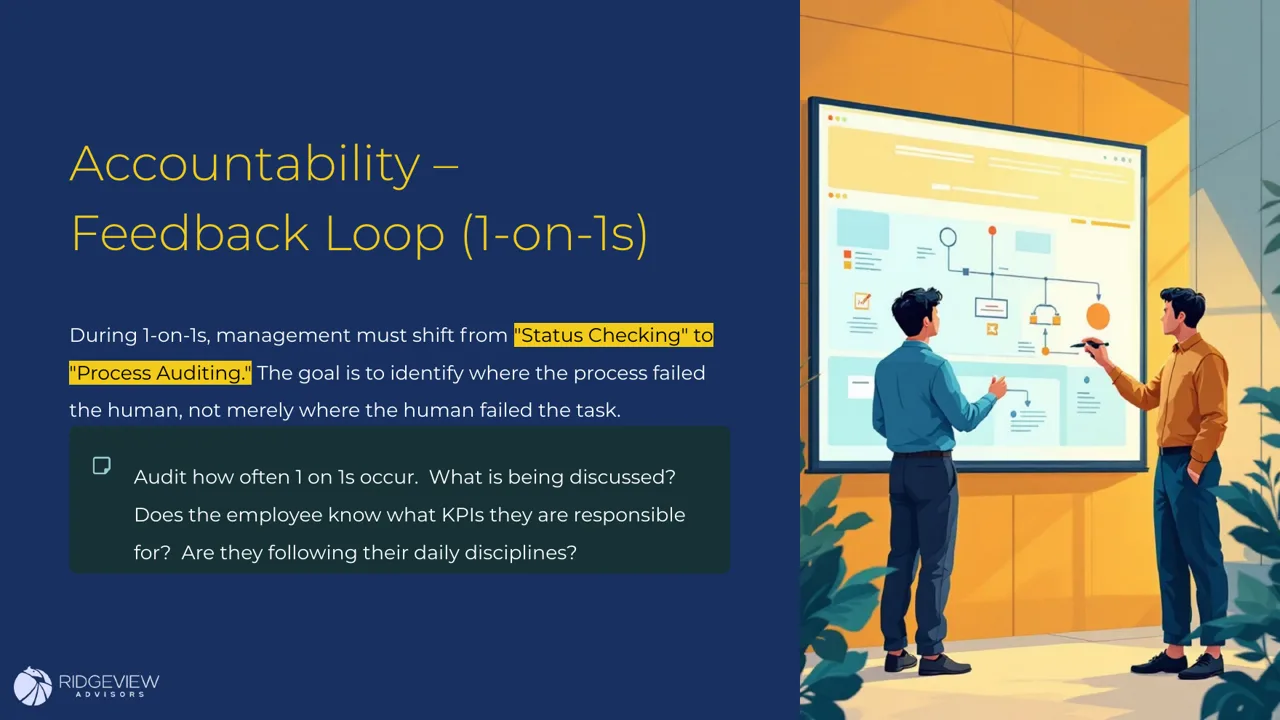
- The KPI hierarchy: limit tech scorecards to three to five metrics. Use one-on-ones to audit the process, finding where the system failed the human rather than only where the human failed the task.
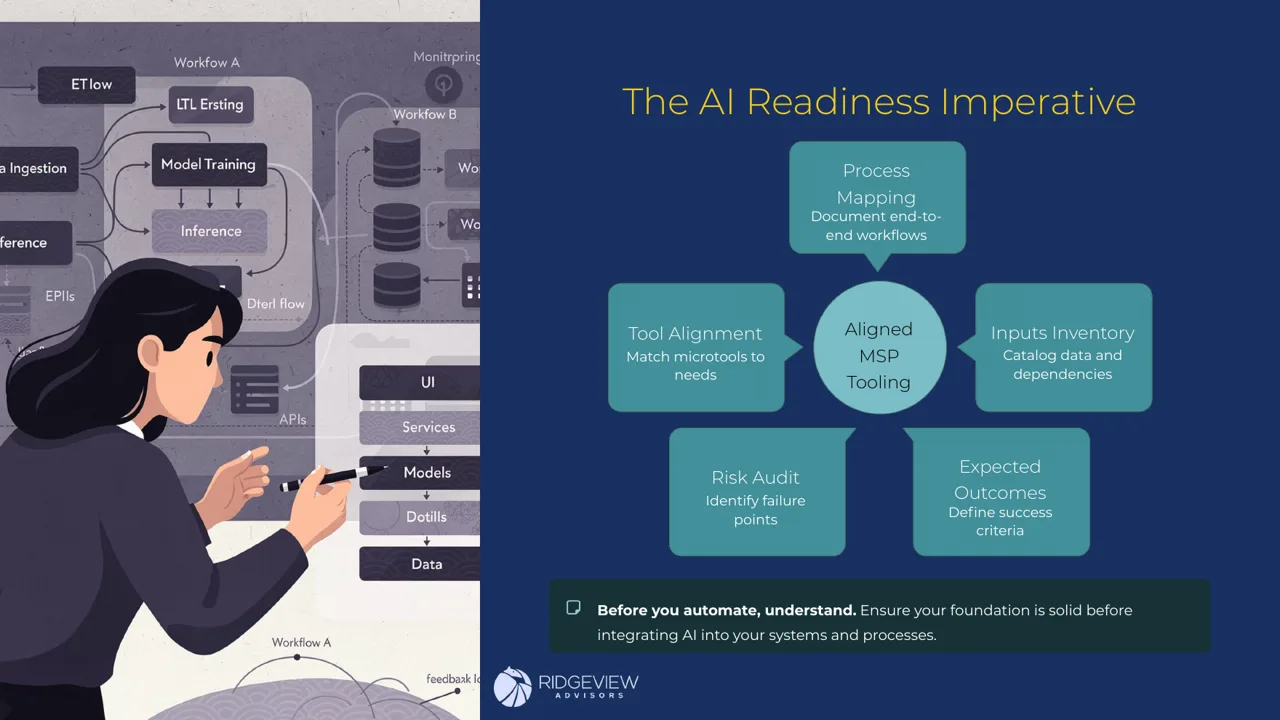
The AI readiness imperative
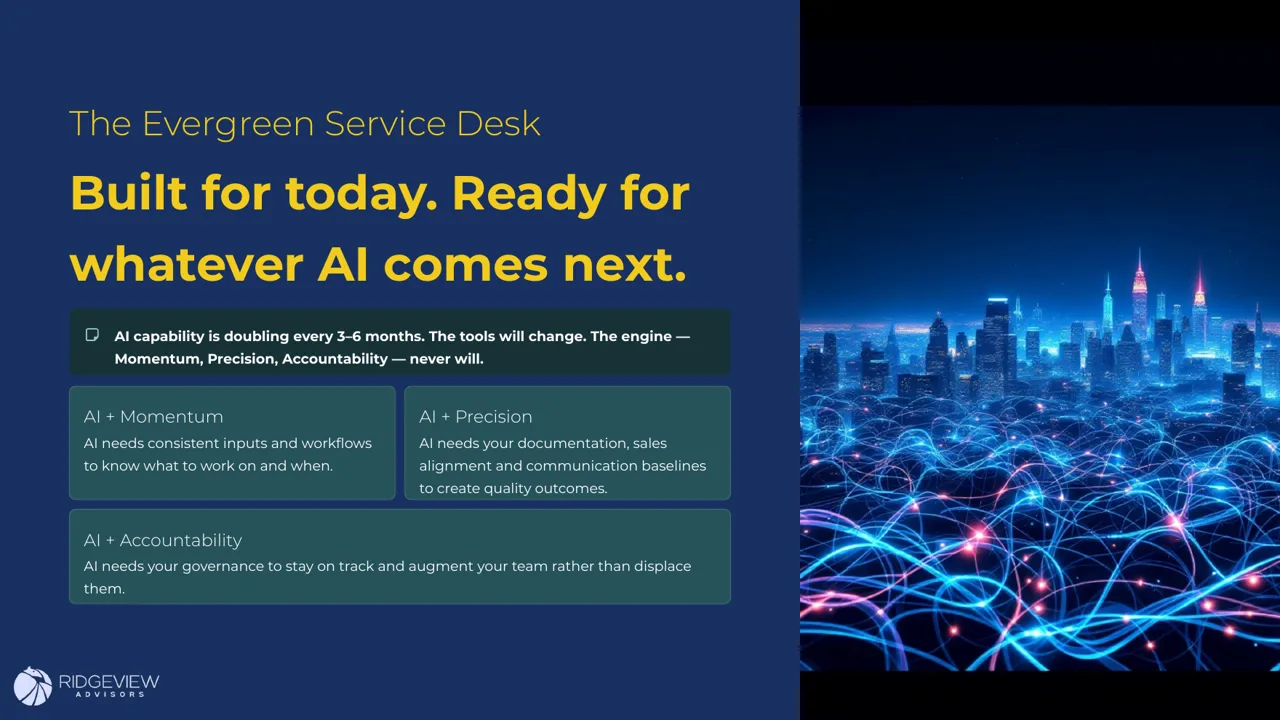
Before you automate, you have to understand. Map every point where a human touches a process and you gain the clarity to insert AI microtools exactly where they add efficiency, instead of papering over a broken step. That sequence, fix the engine, then automate it, is the same one we argue for in operationalizing agentic AI to protect your 2027 margins. The tools will keep changing. The engine stays the same: built for today, ready for whatever comes next.
At Ridgeview Advisors, we teach MSP service teams how to build this operational engine before they automate it, in cohorts with operators solving the same problem. When you are ready to make your service desk evergreen, join a cohort (opens in a new tab).